Bags
How to Read a Tote Bag Listing: Denier, Lining and Hardware Claims
Most tote listings hide their weakest point in plain sight. The three construction details that predict whether a work tote lasts two years or ten — and the words that signal a marketing spec sheet.
By Claire Donovan · Published Sep 15, 2026 · Updated Sep 15, 2026
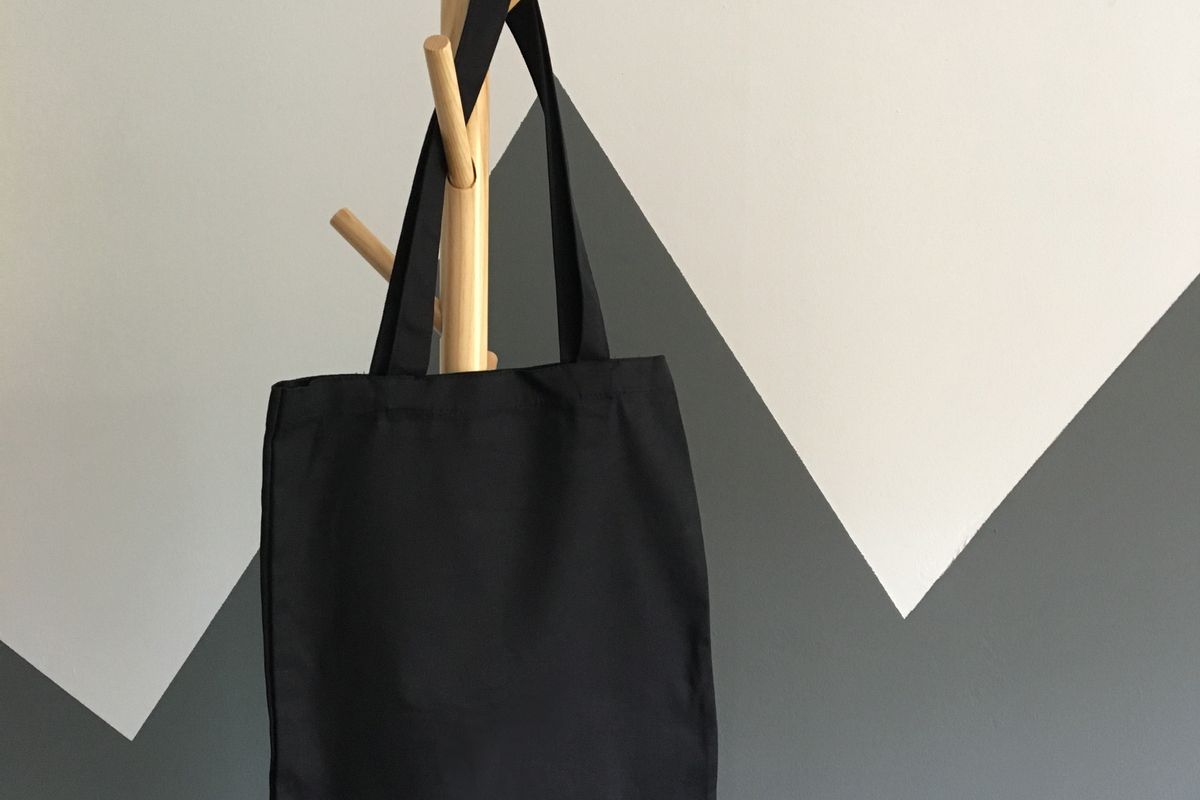
Tote bag listings are full of confident nouns — full-grain, water-resistant, laptop-friendly — and short on the three numbers and two construction details that predict lifespan. Here is what to look for before you fall for the photography.
Denier: a real number, imperfectly used
Denier measures yarn thickness: the higher the number, the thicker the yarn. Strictly, it is the weight in grams of 9,000 meters of filament — a yarn measure, not a fabric one. Canvas is usually sold the other way, in ounces per square yard of cloth, and there is no honest conversion between the two because weave density sits in between. Everyday canvas totes commonly sit between 12 and 24 ounces per square yard, while nylon and polyester work totes live in the 500D to 1680D range. The useful reading is not the number alone but the pairing: a 600D polyester with a polyurethane coating resists water and scuffs better than an uncoated fabric twice as heavy. If a listing gives you neither a denier nor a fabric weight, that absence is itself information — confident brands publish what they are proud of, the same tell as on sunglasses labels.
Lining: where cheap bags quit
The lining is the tote’s chassis. Open-topped totes with unlined interiors rely entirely on strap anchoring through a single layer of fabric, which is why budget totes fail the same way: not by wearing out, but by the strap pulling through the corner seam. The stitch at the anchor has a name: a box-and-X pattern — a rectangle with a diagonal cross inside — spreads pulling force in several directions instead of one seam line. Look for a lined interior — twill, suede-like synthetic, or a second layer of the shell fabric — and for straps whose anchoring is described as boxed, riveted, or wrapped through the lining rather than topstitched to the shell.
Pockets and where the weight sits
Pocket count is a convenience spec that behaves like a structural one. A tote whose contents slide into one corner loads the straps unevenly and stretches one panel of the shell — a failure that shows up months later as a sagging side and a twisted strap. Two or three interior pockets keep small items from pooling, and a sleeve that holds a laptop upright against the back panel keeps the heaviest object centered, loading both straps evenly. Listings rarely publish pocket dimensions, but most count them, and a maker who bothers usually knows how the bag gets carried.
Hardware: zippers and the honest brands
Zippers carry brand names for a reason: YKK’s reputation is earned at exactly the point where generic zippers fail. A listing that names its zipper brand is telling you the maker expects you to check; a listing that says metal zippers while omitting the name is not necessarily hiding anything, but the pattern holds — the more construction specifics a listing volunteers, the fewer surprises the bag tends to hold. For leather-trimmed totes, check whether the trim is named as genuine leather or left as PU; trim is where marketing language goes to hide.
The two-minute pre-purchase check
Read the listing for the three published details — fabric weight or denier, lining description, hardware sourcing. A tote also tends to earn a permanent slot in a capsule wardrobe. Then check the return policy, because strap comfort is the one thing no spec sheet reveals: a well-built tote with thin unpadded straps on a heavy commute is still the wrong tote. Construction facts filter out the badly made; only carrying it filters out the badly chosen.
FAQ
- Is a higher denier always better?
- Higher denier means thicker yarns, which generally means more abrasion resistance — but weave and coating matter as much as the number. A tightly woven 600D polyester with a good coating can outlast a loosely woven 1200D. Treat denier as one input, not a score.
- What does full-grain leather mean on a bag?
- The same as on shoes: the hide kept its outermost layer, so it shows natural marks and develops patina rather than wearing through a surface coating. On bags, full-grain hides thickness also resists sagging — one reason full-grain totes hold their shape for decades.
- Are laptop compartments padded enough to matter?
- A dedicated padded sleeve is worth having, but check what the padding is attached to. A sleeve sewn only to the lining protects against scratches, not drops; protection comes when the compartment sits within a structured panel. If the listing praises the sleeve but not the structure, temper expectations.
Claire Donovan
Spent eight years in womenswear buying before moving to editorial research. Reads care labels for fun and returns nothing without a wear log. How we research.