Clothing
Reading a Merino Sweater Label Before It Ever Pills
Fiber diameter, yarn twist, and blend percentages decide how a merino sweater ages. Here is what the label can tell you about pilling before you pay.
By Claire Donovan · Published Sep 24, 2026 · Updated Sep 24, 2026
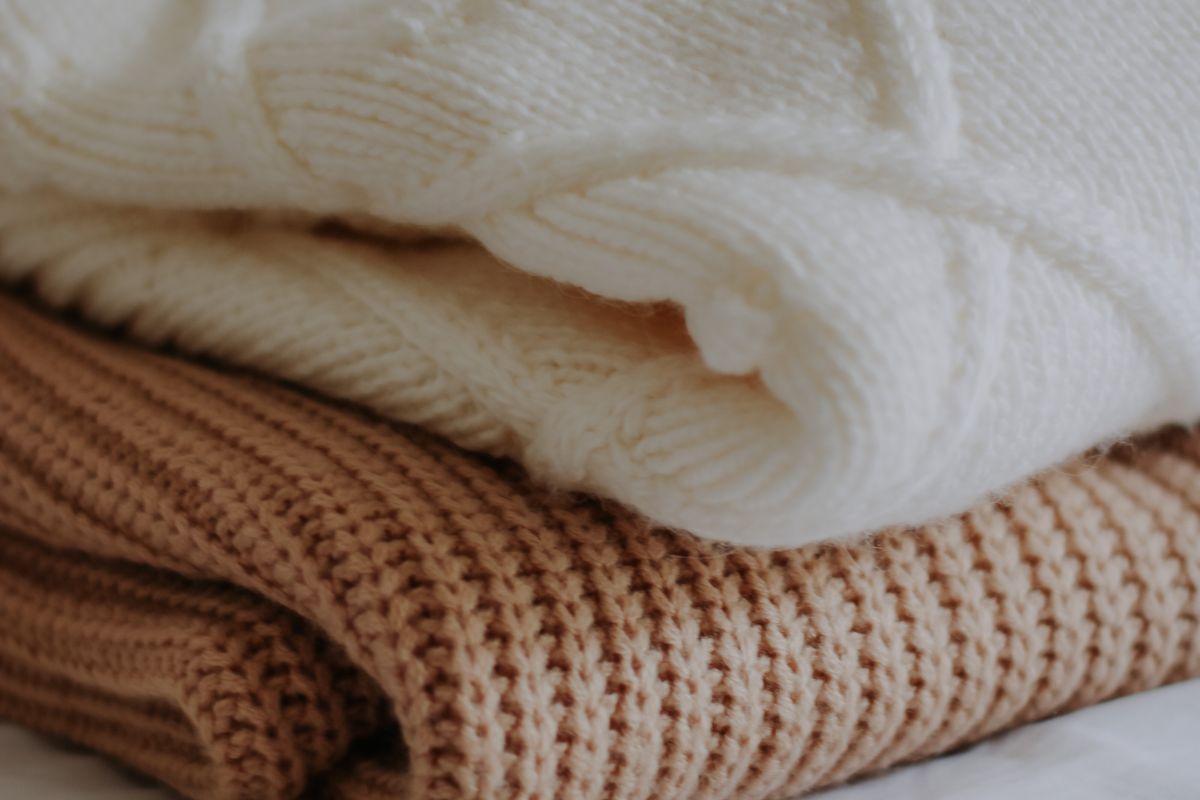
Merino sweater listings lean on two words — “100% merino” and “ultrafine” — as if either one predicted how the sweater will look in six months. Neither does. Pilling is decided by fiber diameter, staple length, yarn twist, and knit density, and a label that states none of them is leaving you to guess. Here is what the numbers on a label actually tell you about the fuzz that shows up under the arms and along the sides.
What the micron number does and does not promise
Merino wool generally runs between 15 and 24 microns, against 25 to 40 for ordinary wool. Below roughly 22 microns most people stop feeling prickle, and fiber at 17.5 microns or finer is classified as superfine. But micron count measures softness, not pilling resistance. Owner feedback on fine-gauge merino repeatedly notes that the softest knits pill first, because a finer fiber is less stiff and its loose ends migrate to the surface more easily under friction. The micron number is a comfort spec. Treating it as a durability spec is the single most common misreading of a merino label.
Twist, density, and why two 100% merino sweaters differ
How the yarn is built matters as much as the fiber inside it. Worsted-spun yarns are combed so fibers lie parallel, which produces a smoother, tighter yarn that pills far less than the loftier, jumbled woolen-spun alternative. Higher twist holds fiber ends in place; a dense, closely knit fabric leaves fewer ends exposed to begin with. Labels rarely print twist per inch or knit gauge, which is why two sweaters both reading “100% merino” can age in opposite directions. Brands that publish the micron count and fabric weight alongside the content claim are giving you the full picture; the absence of any numbers beyond “100%” tells you the content claim is doing all the work.
Reading the blend percentages
In the United States, the Textile Fiber Products Identification Act requires every garment to list each fiber’s generic name and its percentage by weight. That means there is no official threshold below which merino stops counting as merino: any amount of nylon or polyester present, and the label must say so. A sweater reading “92% merino wool, 8% nylon” is a blend by definition — and not a worse one for it. Nylon added at low percentages increases abrasion resistance, which is why sock yarns have used the trick for decades. The trade-offs are real: less odor resistance, and a garment that sheds plastic in the wash. What the percentages cannot tell you is which fiber went into the high-friction zones.
How washing habits decide the outcome
Care shortens or extends the pilling timeline more than most spec sheets admit. Hot water and agitation can felt wool, matting the scales together and distorting the knit; repeated machine cycles rough up the surface and feed the fuzz. Wool’s natural odor resistance means fewer washes are needed in the first place — airing a sweater between wears is often enough. When washing does come due, cold water on a wool cycle, inside a mesh bag, dried flat, keeps the fiber surface intact. And once pills do form, a fabric shaver beats fingers: picking pills out drags neighboring fibers with them and guarantees a faster second crop.
For more on reading construction claims against a listing rather than a hanger, see how to read a tote bag listing, and for placing durable pieces inside a smaller wardrobe, the capsule wardrobe, audited covers the math.
FAQ
- Does finer merino wool pill less?
- No, and the relationship often runs the other way. Micron count measures softness, not durability. Very fine fibers are less stiff, so their loose ends migrate to the fabric surface more easily, which is one reason superfine merino knits are reported to pill more than sturdier mid-micron wool.
- Is a 100% merino label a quality guarantee?
- It is a content claim, not a quality claim. It confirms the garment contains no other fibers, but says nothing about fiber diameter, staple length, yarn twist, ply, or knit density — the variables that actually decide how fast it pills.
- Should I pick pills off a merino sweater by hand?
- Picking pulls neighboring fibers out with the pill and leaves the surface weaker, so the area pills faster afterward. A fabric shaver or sweater comb removes pills without tugging, and a careful pass early in the garment's life keeps the surface from compounding.
Claire Donovan
Spent eight years in womenswear buying before moving to editorial research. Reads care labels for fun and returns nothing without a wear log. How we research.