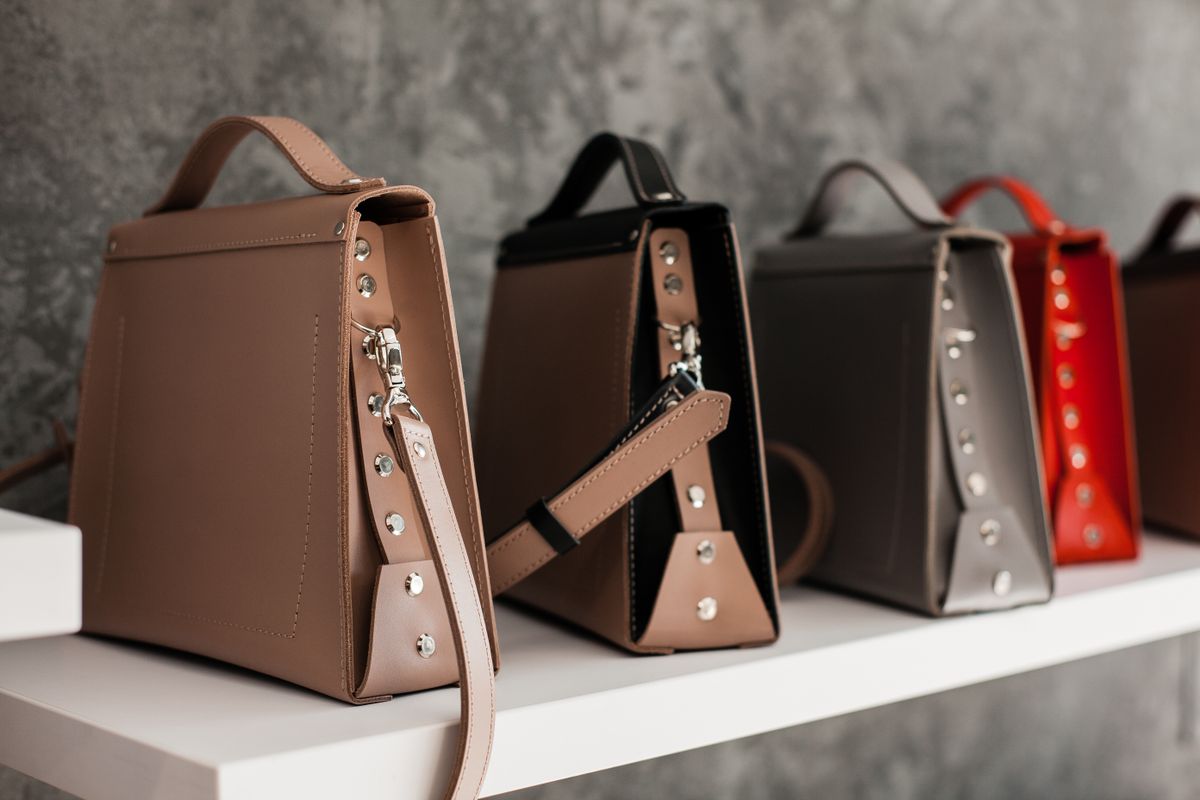
A leather tote’s price says little about how it will look in year five. The
tannage, the base, the handle anchoring, and the edge finishing decide it.
Those four choices are visible in listings and in hand, if you know what to
look for.
Tannage sets the aging curve
Vegetable-tanned leather, cured with tree-bark tannins over weeks, comes out
firm and pale and darkens with light, handling, and oil into a patina.
Chrome-tanned leather, cured with chromium salts in about a day, arrives
softer and color-stable: it ages by staying close to its day-one shade rather
than by darkening. Neither is the better leather; they are different promises.
Madewell The Transport Tote is listed on its product page as vegetable-tanned
leather that burnishes with wear into a beautiful patina — a maker stating the
aging curve as a feature. Cuyana builds the Cuyana System Tote 13-inch from
pebbled Italian leather instead, which keeps its texture and color steadier
over years of commuting. Polène says the same thing from the luxury side: its
care guidance notes the leather will acquire a patina and age more
beautifully. Scratches read differently too — on veg-tan they darken and merge
into the patina; on a stiff finished chrome-tan they can show as pale lines.
The base decides if it stands
A tote that greets the day upright has a stiffened bottom panel — leather
folded over a board or a multi-layer base — and often small metal feet. The
feet keep the base off wet pavement and grimy floors, which is where a
soft-bottom tote finishes its commute. Coach’s Field Tote 30 listing, for
example, specifies four protective feet at the base. On listings without feet,
check whether the maker mentions a reinforced or structured base at all. An
unlined, unstiffened tote will relax into a slouch as it breaks in — commonly
reported in owner feedback on soft veg-tan totes — which many owners like and
some do not.
Handles carry the verdict
Handles fail before leather does. The stress point is where the handle meets
the body, and the construction that survives is a handle wrapped around or
through the panel and anchored with a load-spreading stitch. Polène notes on
the Polène Cyme Tote product page that its straps are held in place by
hand-sewn stitches — the saddle stitch, which holds even if a single stitch is
cut, because each stitch locks independently; a machine lockstitch can unravel
along the row once one stitch breaks. Short of knowing the stitch type, count
what the listing does tell you: handle drop, reinforcement layers, anything
about anchoring. A listing that publishes none of it is not necessarily hiding
a weakness, but the pattern holds across categories: specifics track quality.
Edges: painted or burnished
The edge is the tote’s tell. Painted edges — polymer edge paint, color-matched
— look crisp on day one and are the common choice at scale, but on flex points
like the top rim they can crack or peel after years of daily use. Burnished
edges are the leather’s own fibers compacted and sealed with wax and heat;
they age with the hide instead of separating from it. Neither is wrong: a
well-executed painted edge on a lightly used bag lasts decades. On a bag you
plan to carry daily, though, a burnished edge removes one failure mode you
cannot repair cheaply.
None of this requires a workshop visit to check. Tannage is named, feet are
photographed, and edge finishing is visible in any close-up. The three picks
below make different bets on the aging curve; the side-by-side table under
this article lines the claims up. The same reading habit works on
canvas and nylon totes, and on
material labels generally.
The picks
Some links below are affiliate links — we may earn a commission at no extra cost to you.
01
Madewell The Transport Tote
The patina play Madewell states the aging curve right on the product page: vegetable-tanned leather that burnishes with wear into a beautiful patina. Unlined by design, so expect it to soften and slouch into its final shape.
USD 168
Pros
- Vegetable-tanned leather, named as such on the product page
- LWG Gold-rated tannery sourcing, stated in the listing
Cons
- Unlined body relaxes and slouches under load
- Open top with no closure
Check current price
02
Cuyana System Tote 13-inch
The modular commuter Pebbled Italian leather with a snap-in system of pouches and laptop sleeves, backed by a two-year warranty. The texture wears the way veg-tan does not: quietly, and without color change.
USD 358
Pros
- Modular snap-in organizers, including a dedicated laptop sleeve
- Two-year warranty stated at purchase
Cons
- Pebbled finish stays color-steady rather than developing contrast patina
- System accessories are sold separately and add up
Check current price
03
Polène Cyme Tote
The maker's details Made in Spain, with the strap anchoring named on the product page: hand-sewn stitches. The brand runs a repair service at cost, which is the commitment that matters on a long-horizon bag.
USD 630
Pros
- Hand-sewn strap stitches, stated on the product page
- At-cost repair service offered directly by the brand
Cons
- Magnetic rather than zippered closure
- Sculpted shape holds less than its footprint suggests
Check current price