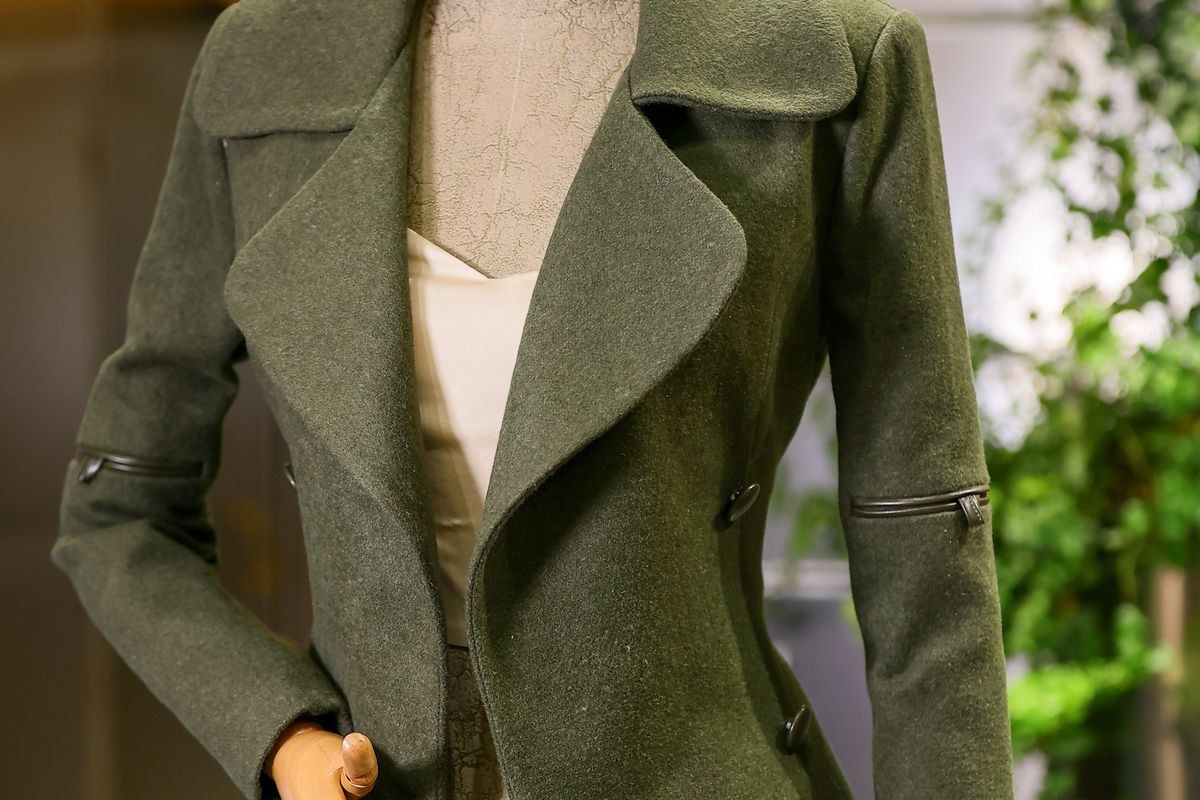
A wool coat is the most expensive single item in most winter wardrobes, and
also the one where marketing language hides the most. The fabric percentage
gets the label’s largest type; the construction that decides whether the coat
survives ten winters gets none. Four checks cover nearly all of it, and every
one can be done in the store with your hands.
Lining first, because it is the fastest tell
A full lining backs the body and sleeves with a separate fabric layer. It
lets a heavy coat slide over knitwear and protects the seam allowances, which
is why most structured overcoats have one. A half lining covers roughly the
upper back and shoulders only, cutting weight and cost; it is common on
lighter topcoats. Unlined and double-faced coats join two face fabrics so
neither side needs covering — legitimate construction, but check that the
inner seams are bound rather than left raw.
Lining material matters as much as coverage. Cupro and viscose breathe and
drape like cotton. Polyester is cheaper and more abrasion-resistant, but it
holds heat against the body, and it is where most lining-splitting complaints
start. A full polyester lining is not a defect at lower prices; it is one of
the trade-offs you are accepting.
A store test beats any product page here. Slide a hand inside and run it down
the back: a full lining announces itself immediately, a half lining leaves
bare fabric below the shoulder blades, and raw seam allowances inside a coat
sold as unlined tell you the maker stopped one step short of finishing the
garment. While your hand is in there, feel whether the lining hangs loose or
is pulled tight across the body — a lining under tension is the kind that
splits at the back seam first, because every sit flexes it against the shell.
Read the wool percentage like a buyer
The Textile Act obliges sellers to state fiber content, so the label is a
legal claim, not a suggestion. Wool at 90 percent or higher behaves like
wool: it recovers from wrinkles, regulates temperature, and takes a pressing.
Blends are not automatically worse — nylon improves abrasion resistance and
lowers cost — but the behavior shifts with the ratio. One current budget
listing at a major retailer reads 42 percent nylon, 37 percent wool,
21 percent polyester; that coat will wear more like a synthetic with wool’s
name attached. Below roughly two-thirds wool, expect earlier pilling and less
recovery between wears. Fiber order on the label follows share, so the first
word is the majority fiber. The naming and ordering rules behind that label
are covered in more depth in
what the Textile Act requires of fiber claims.
Two labels can read almost the same and behave differently. A 90 percent wool
coat with the remainder in nylon is a different animal from a half-and-half
blend padded out with polyester, and the second fiber listed tells you which
problem the blend was solving — wear for nylon, cost for polyester. Price is
a clue but not proof, which is why the content tag gets read before the price
tag.
Shoulders, sleeve heads, and the collar
A coat can pass every check above and still wear badly because of the
shoulder. It is the one area no alteration fixes cheaply: a shoulder seam
that lands off your natural shoulder point drags the whole garment with it.
Try the coat over what you will actually wear it with — a heavy knit changes
the read more than a dress shirt — and stand far enough from the mirror to
see the whole line. The seam should end at the edge of your shoulder bone,
and the sleeve should hang without diagonal pulls running from the armpit
down the arm.
Under the fabric, better coats manage bulk at the shoulder instead of
pretending it is not there. A sleeve head — a soft strip of filler between
shell and lining at the crown — lets the sleeve ease onto the shoulder
smoothly. Puckers at the sleeve crown are not a fatal flaw at moderate
prices, but they mark where the minutes were saved, and on a coat you plan to
keep for a decade they are the first thing you notice in every photo of
yourself. The collar belongs to the same look: it should sit against the
neck and hold its roll, not stand off the body or collapse flat.
Stitch density and seam finishing
Turn the coat inside out. Dense, even stitching — a working benchmark is ten
or more stitches per inch on lapels and main seams — usually signals slower
machines and better fabric handling. Sparse stitching that drifts off-line is
the classic speed-sewn marker. Then check the raw edges: bound or cleanly
finished seam allowances hold up over years, while loosely serged edges that
fuzz after one season are common in the value tier and tend to fail first at
the armhole, where stress concentrates.
The stitch check pairs with a seam-geometry check. Where two panels meet
under load — armhole, shoulder, side body — the allowance should be pressed
and finished so no thread crosses a raw edge that can unravel out from under
the stitching. The four seam types and what each is for
makes the vocabulary concrete; a coat with a bound finish at the armhole is
spending machine time where the load actually lives.
The front edge takes thirty seconds. Buttons on a coat carry real load,
which is why a shank button — one that sits on a small stem, with a gap
between button and cloth — outlasts a flat sew-through button pulled tight
against the fabric; the thread lasts longer when it is not constantly
abraded. Natural horn or corozo reads irregular up close, with grain and
color shifting from button to button. Perfectly identical glossy plastic is
the cheapest closure available and a fair signal at low prices. Buttonholes
come next: dense stitching, clean slots, no puckering at the ends. A
buttonhole is a small knot of machine work, and a sloppy one is visible from
arm’s length. Shank versus sew-through construction
covers that question in detail.
Overlap depth decides the double-breasted cut. A front that wraps generously
and buttons below the widest point of the chest stays closed in wind; a
shallow overlap relies on the buttons alone and gapes the moment the coat
pulls across your back. Stand sideways in the fitting mirror and button it
fully before judging the silhouette.
Hems, cuffs, and the four-minute check
A hand-felled or blind-stitched hem lies flat and can be let down for
alteration; a hem that is glued or flattened under a straight row of
topstitching cannot. Cuffs should mirror the hem method. Run a thumbnail
along the hem from the inside — anything that crackles or feels rigid may be
fused, and fusing is what bubbles and delaminates after a few cleanings.
Budget four minutes: lining, label, seams, hem. It is the same audit logic we
used in the capsule wardrobe, audited
and in how to read a tote bag listing.
Where wool coats fail first
Ten-year ownership has a short failure list, and the shell fabric is not on
it. Linings go first: the seat of the lining flexes every time you sit, and
a split there is a small tailor visit if caught early and a full relining job
if ignored. Cuffs and pocket edges abrade second, from hands, keys, and the
constant reach of a coat worn daily. Moth damage comes third, and it favors
stored coats over worn ones — larvae seek undisturbed wool, which makes the
coat left in a closet bag for a season more vulnerable than the one cycling
through rotation. All of it is visible in year one, which is why the last
minute of the four-minute check belongs to the inside of the coat, not the
outside. The storage rules that protect sweaters apply to coats too; they are
laid out in how to store wool against moths.
Living with wool between wears
Wool asks for less maintenance than most fabrics in the closet, but what it
asks is specific. Hang the coat on a broad wooden hanger so the shoulder
keeps its shape, and give it a day of air between wears — wool sheds most
odor on its own, and a garment brush removes the grit that would otherwise
work into the weave. Dry cleaning belongs to stains and to end-of-season
storage, not to routine: solvent cycles are hard on both fibers and linings,
and a coat cleaned every few weeks without cause is being aged on purpose.
Before it goes away for the summer, clean it, brush it, and store it where
air can move. The goal is to hand the maker’s construction to next November
intact.
Three coats at three prices
For a 100 percent wool example, the
L.L.Bean Women’s Classic Lambswool Polo Coat, Three-Quarter Length
pairs an Italian lambswool shell with a full polyester lining at USD 290. In
the middle, the J.Crew Tailored Peacoat in Italian Wool-Blend Melton is
the classic double-breasted melton cut at USD 398. For a modern double-faced
option, the COS Belted Double-Faced Wool Coat lists 60 percent RWS wool
with a viscose lining at USD 350. Details, links, and the side-by-side
comparison are in the table below.
Each pick trades a different line of the checklist, which is the point. The
L.L.Bean coat is the only one of the three at a full 100 percent wool, and it
accepts a polyester lining as the price of that. The J.Crew buys the classic
melton silhouette and gives up some wool share to get it. The COS publishes
its composition plainly and takes a 60 percent wool blend in exchange for
double-faced construction. None of that is hidden; read the picks against the
four checks above and the trade-offs sit on the surface, where they belong.