Clothing
Fleece Hoodies: What GSM, Loopback, and Yarn Type Tell You First
A fleece hoodie's weight in GSM, its loopback or brushed backing, and the yarn behind both decide how it ages. Here is how to read a listing before buying.
By Claire Donovan · Published Nov 14, 2026 · Updated Nov 14, 2026

The short version
A fleece hoodie's weight in GSM, its loopback or brushed backing, and the yarn behind both decide how it ages. Here is how to read a listing before buying.
Every label term in this guide is explained in what the symbols actually mean .
Hoodie listings describe a fabric with two numbers and a mood. The numbers are usually a weight in GSM and a cotton-to-polyester ratio; the mood is a word like “heavyweight” doing the work the numbers should. All three can be true and the hoodie still disappoint, because the variable that decides how a fleece wears in month six is none of them — it is how the yarn was spun and whether the inside of the fabric was brushed. Here is what each spec on the label actually predicts.
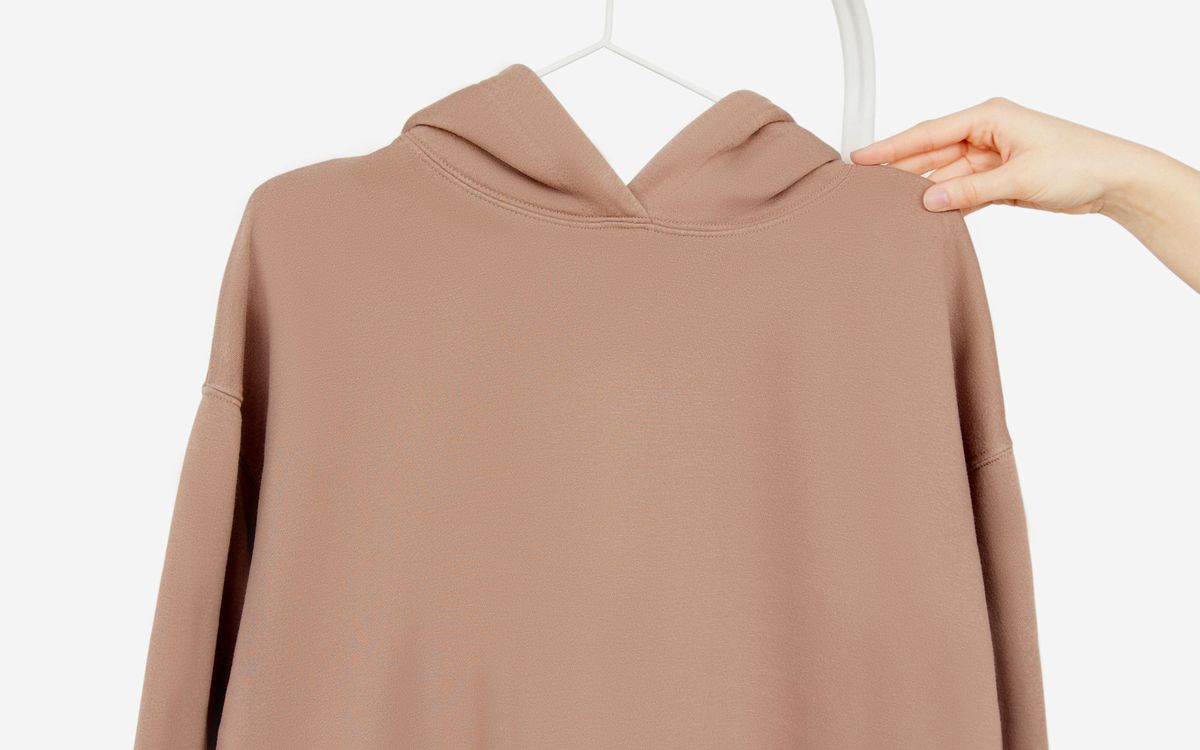
The fabric weight you can feel through the hand; the yarn behind it you cannot.
Reading the GSM number
GSM — grams per square meter — is the same fabric-weight figure that matters when judging a shirt, and the shirt weight guide covers how it interacts with weave and opacity. Fleece runs much heavier than woven shirting. Most hooded sweatshirts land somewhere between roughly 250 and 450 GSM: lighter fabrics around 250 to 300 layer well and dry fast; midweights near 300 to 350 carry the classic sweatshirt drape; fabrics above 400 GSM feel garment-like, hold their shape through the day, and take noticeably longer to dry. Heavier also usually means denser at the same yarn quality, which is why weight correlates loosely with durability — but the correlation breaks when a brand thickens a weak yarn instead of tightening the knit.
The number worth asking for is weight per area rather than the adjective. “Midweight” spans a range wide enough to hide a fifty-GSM difference between two garments from the same brand in consecutive seasons. Listings that print the GSM figure are publishing something checkable; listings that print only “premium heavyweight fleece” are publishing a mood.
Loopback versus brushed backing
Turn a fleece inside out and the interior tells you which of two fabrics you are holding. Loopback fleece — the traditional sweatshirt construction — knits the underside into loops that sit against the skin, leaving a smooth, tight surface that softens with washing instead of fraying. Brushed fleece has been run through a brushing step that raises those loops into a nap: plush, immediately soft, and warmer for its weight, because the raised fibers trap still air. Neither is a defect. They are different bets.
The trade shows up over time rather than at purchase. A brushed interior is, structurally, a surface of deliberately loosened fiber ends, and loose ends are the raw material of pilling — the same mechanism that afflicts soft knits, explained in the merino pilling guide. Owners commonly report that brushed fleece keeps its velvet hand for a season and then compacts into a flatter, fuzzier surface, especially where a bag strap or seatbelt rides the fabric. Loopback starts less cuddly and ages more slowly: the loops wear down gradually, and a loopback hoodie at year two usually looks close to what it looked at month one. Buy brushed fleece for the feel of the first week; buy loopback for the fit of the hundredth wear.
What the yarn does to both
The same GSM can be built from different yarns, and this is the spec almost no listing prints. Ring-spun cotton — fibers combed parallel and twisted tight — makes a smooth, strong yarn that knits into a dense, even-faced fleece. Open-end spinning, cheaper and faster, produces a fuzzier, weaker yarn that is the workhorse of budget fleece; it looks fine new and pills sooner. An easy in-store tell: ring-spun fabric reads as a fine, regular knit face with a slight sheen, while open-end fabric looks matte and slightly hairy even before its first wash. Hold it against a light, too — a dense knit blocks more glow through the gaps between stitches, a check that works here the same way it works on wool.
Fiber content does one clear job in fleece. A polyester share — commonly a third or so in classic sweatshirt blends — stabilizes the cotton, cuts shrinkage, and speeds drying; a fully cotton garment is softer in hand but moves more in the wash, which is why the first-wash shrinkage guide tells you to treat the first cycle as a measurement, not a formality. One hundred percent cotton fleece is not a worse fabric; it is a fabric that expects cooler laundering and rewards it.
The parts that quit first
Fleece fabric rarely fails before its edges do. Ribbed cuffs and hem bands are knit with stretch and recovery, and their failure mode is slow loss of grip: cuffs that ride up the wrist, a hem band that folds rather than grips. Elastane in the ribbing helps, but recovery is mostly a function of how tightly the rib was knit, which correlates with the fabric weight — another reason the GSM number matters more than the mood word. Check the ribbing on any hoodie you already own that has been through a year of pulling-on; that is the honest forecast for the next one.
Seams are the second tell. Side seams in better sweatshirts are frequently flatlocked, a flat, low-bulk join that sits comfortably against skin under another layer, while cheaper overlocked-only seams bunch at the underarm. The shoulder-to-cuff seam takes the most stress in a pull-over garment, so pucker or loose thread tension there predicts the first repair. None of this requires a lab — a garment in hand announces most of it in thirty seconds, which is the same reason construction claims are best read on a physical garment, as the pocket construction guide argues for trousers.
Matching the spec to the use
The right fleece is a function of how the hoodie gets worn. Under a shell, for running or travel where it may be washed the same week, lighter loopback around 250 to 300 GSM in a poly blend is the low-maintenance answer. As an outer layer over a tee, in the month-one stage of a wardrobe where one garment does most of the work, the midweight 320 to 380 GSM ring-spun loopback sweatshirt remains the reference construction — the shape of it has survived seventy years of sportswear for structural reasons, not nostalgia. Heavyweight 400-plus brushed fleece is a comfort purchase: warm, plush, slow to dry, and at its best worn on its own terms rather than layered.
What to walk away from is any listing that stays silent on all three variables at once — no GSM, no interior description, no yarn detail beyond the fiber percentages. Silence across the board is a pricing signal, and the savings tend to be collected later, in pilling, shrinkage, and cuffs that give up early. The brands that print the numbers are the ones that had numbers worth printing.
Claire Donovan
Spent eight years in womenswear buying before moving to editorial research. Reads care labels for fun and returns nothing without a wear log. How we rate.
More in Clothing
FAQ
- What GSM should a good hoodie be?
- Most hoodies fall between roughly 250 and 450 GSM, and midweight fabrics around 300 to 350 GSM cover three-season wear for most people. The number alone is not a quality grade — yarn type and knit density decide whether a given weight feels substantial or slouchy after a season.
- Does brushing a fleece make it worse?
- Brushing raises the fiber ends on the inside of the fabric, which makes it softer and warmer but also gives loose ends a head start on pilling and fuzzing. Loopback fleece skips that step, so it stays smoother longer at the cost of less initial plushness.
- Why does my hoodie shrink even though the label says preshrunk?
- Preshrunk fabric has already been through a dimensional stabilization step, but cotton knits can still move a few percent on the first hot wash, and dryer heat does most of the damage. Washing cold and drying flat or low removes most of the remaining risk.