Shoes
Full Grain, Top Grain, Genuine: What Leather Grades Actually Mean
The four-tier leather hierarchy is a trade convention, not a legal standard — and genuine leather, the tier buyers trust most, is the least meaningful term on the label.
By Claire Donovan · Published Oct 3, 2026 · Updated Oct 10, 2026
The short version
The four-tier leather hierarchy is a trade convention, not a legal standard — and genuine leather, the tier buyers trust most, is the least meaningful term on the label.
Every label term in this guide is explained in what the symbols actually mean .
The leather grade hierarchy — full grain, top grain, genuine, bonded — is the most quoted quality ladder in footwear, and the first thing to know about it is that no law wrote it. The FTC’s leather guides under 16 CFR Part 24 police disclosure: a split must not masquerade as whole hide, an imitation must not be called leather. But the tiers themselves are a trade convention, and the tier buyers trust most, “genuine leather,” means the least. Reading the vocabulary honestly changes how a shoe should be judged.
What the tiers describe
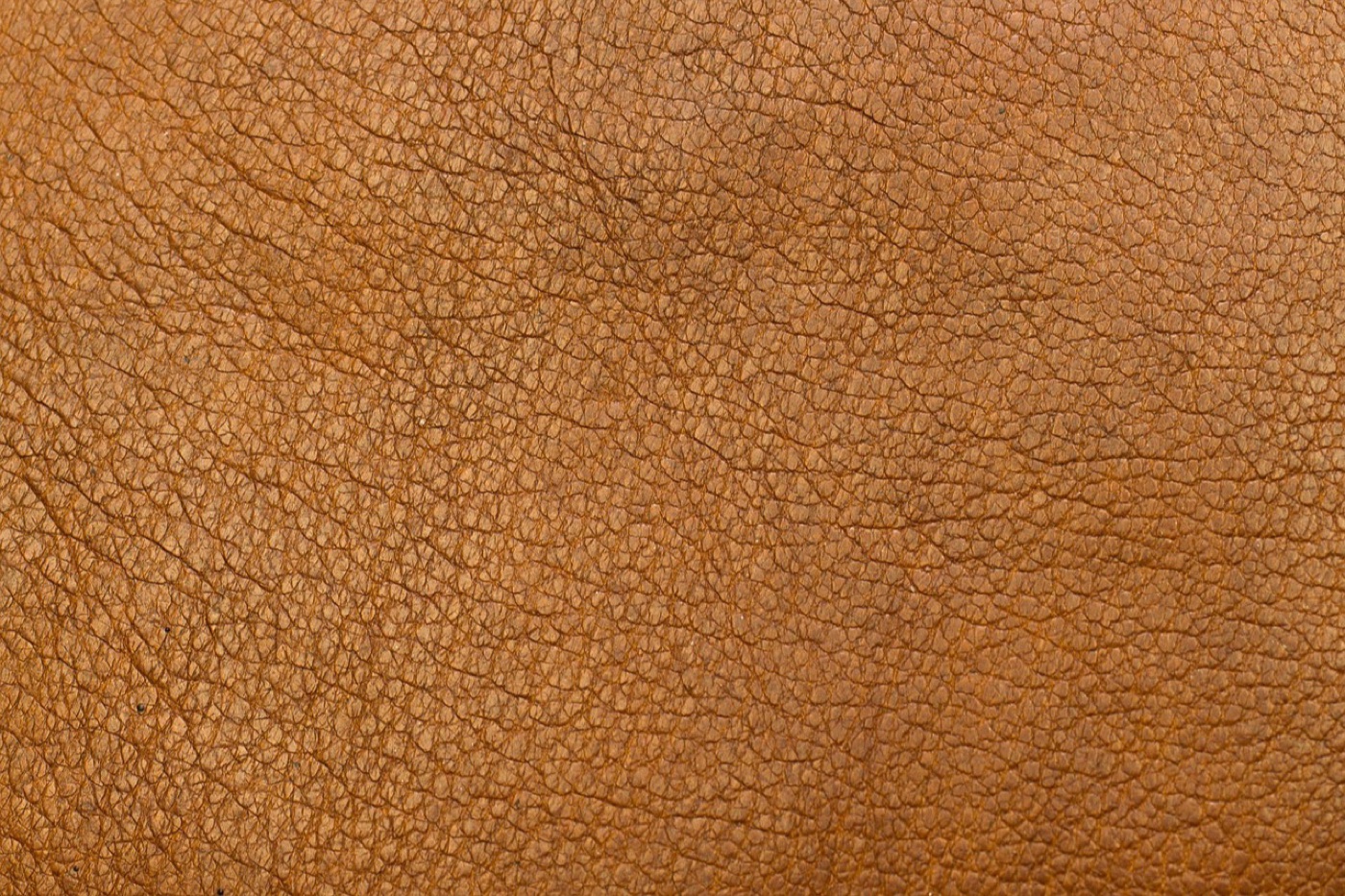
Full grain means the hide’s outer surface was left intact — every pore, scar, and growth line visible, nothing sanded away. It is the strongest part of the hide, because the grain layer is the tightly interwoven fiber structure, and it patinas instead of wearing out. Top grain is the layer just beneath, or the grain sanded lightly to remove blemishes: slightly weaker, more uniform, easier for a factory to work. Genuine leather, in trade practice, is the tier below that — real leather, often from the belly or with heavier correction, marketed on a word chosen for its reassurance rather than its precision. Bonded leather is fiber scrap blended with adhesive and pressed into sheets; it must be labeled as bonded, and no serious footwear uses it for uppers. Suede and nubuck cut across the ladder: suede is flesh side napped, nubuck is grain side buffed, and either can come from good or poor raw material.
How corrected grain is manufactured
Corrected grain is not a grade of hide; it is a process run on imperfect ones. The surface is sanded to knock down scars and insect bites, a pigmented finish coat is applied to cover the correction, and a grain pattern is embossed into the surface with a roller so the result reads as uniform full grain. What gets sanded away is precisely the interwoven fiber structure that makes grain leather strong, which is why corrected leather leans on its finish coat for looks and never develops the patina behavior of intact grain. The embossing is also the tell. Animals do not grow consistent skin, so grain that varies across a panel is more believable than grain that repeats.
Splitting sits one step below correction. A thick hide runs through a machine that slices it horizontally into layers: the outer layer keeps the grain, the inner layers become splits. Under the federal guides, split leather must be described as split. A split with an embossed, finished surface is real leather by law and by fact, but its fiber structure runs the wrong way for strength, since the interwoven grain layer is on a different piece of the hide. That is why the disclosure matters more than the word “leather” on the label.
Why the tannery matters more than the tier
The tiers describe one variable — how much of the grain survived — while the tannery controls everything else: the animal, the area of the hide a panel was cut from, the tanning chemistry, the fatliquoring that decides hand and flex life. A top grain from a first-rate tannery outlasts full grain from a mediocre one, because a shoe upper dies at flex points, and flex resistance is chemistry, not layer count. This is the same construction-over-adjective read that drives the spec check on white leather sneakers: the tag word is a start, the tannery and the cut are the substance. The cut matters more than most listings admit: the same hide yields tighter, denser fiber from the back of the animal and looser, stretchier fiber from the belly, and two panels from one hide can age years apart.
Chrome, vegetable, and the chemistry underneath
Tanning chemistry does much of the work the grade word takes credit for. Chrome tanning, the industry default, uses chromium salts and turns a hide in days; it produces the soft, water-tolerant leather most uppers are made from. Vegetable tanning uses tree-bark tannins over weeks and produces the firmer leather behind most soles and belts, the kind that burnishes and patinas rather than staying pale. The same tier label can sit over either chemistry, and flex life — where an upper actually dies — tracks the tannery’s chemistry and fatliquoring far more closely than it tracks which layer of the hide was used.
What the law actually requires
The federal guides reach the lies, not the grades. A product of split leather must say so, “genuine” cannot be printed on imitation material, and terms like “leather-covered” have defined meanings. Everything comparative — premium, top quality, the implied promise of the ladder itself — is unregulated. The result is a market where “genuine leather” is technically true on a $40 shoe and a $400 one, and the difference lives in facts the label omits: thickness in ounces, tannery, and part of the hide. The same skepticism toward unregulated vocabulary applies to the care words on rain-ready boot claims; leather marketing vocabulary outruns its regulated one, and the gap is where most disappointment lives.
Ounces, thickness, and the number that decides
Thickness is the checkable number. Leather is measured in ounces, where one ounce equals 1/64 inch, about 0.4 millimeters. Uppers commonly run 2 to 3 ounces, belts 8 to 10, sole leather higher still. A listing that states the ounce weight for a specific model has told you more than any grade word, because thickness can be confirmed with a caliper and grade words cannot. The range matters in both directions: thinner than 2 ounces creases hard at the toe box, and much past 3.5 the upper feels boardy and takes months to soften.
The minute-long check
The check takes a minute. Find the cut edge of the upper or a stressed crease near the toe: full grain shows an irregular, fibrous edge and grain that varies across the panel; corrected and genuine leathers show uniform, almost printed-looking grain and a flat, sealed edge. Then crease the toe gently and watch it return. Leather that wrinkles finely and recovers was worth tanning well; leather that creases into a hard line was not, whatever the label calls it.
Claire Donovan
Spent eight years in womenswear buying before moving to editorial research. Reads care labels for fun and returns nothing without a wear log. How we rate.
More in Shoes
FAQ
- Is full grain legally defined in the US?
- No. Federal rules under 16 CFR Part 24 police how leather and imitations may be described — splits must be disclosed, imitations must be labeled — but the term full grain has no binding definition a court would enforce. It is a trade convention meaning the grain surface was left unaltered, and sellers apply it with varying rigor. Treat it as a claim to verify by feel and edge, not a certified grade.
- Is genuine leather good leather?
- Not necessarily, despite the name. In the trade hierarchy genuine leather is a tier below full grain and top grain — it is real leather, but usually from lower areas of the hide or with the surface corrected, and the word genuine was popularized precisely because it sounds like assurance. It is legally real and commercially near-meaningless: plenty of it performs well for belts and casual shoes, but it is not the premium the word implies.
- What thickness should shoe leather be?
- Leather is measured in ounces, where one ounce equals 1/64 inch, about 0.4 mm. Shoe uppers commonly run 2 to 3 ounces, belt leather 8 to 10, and sole leather 10 or more. For uppers, the useful range is a balance: thinner than 2 ounces creases and tears at the toe box, while much above 3.5 ounces feels boardy and takes months to soften. A seller who can state thickness in ounces usually knows their tannery.