Jewelry
Pearl Types and Grades: Akoya, Freshwater, South Sea
What separates akoya, freshwater, South Sea, and Tahitian pearls — oysters, nacre thickness, and why the AAA-to-A grade on the tag is convention, not law.
By Claire Donovan · Published Sep 5, 2026 · Updated Sep 5, 2026
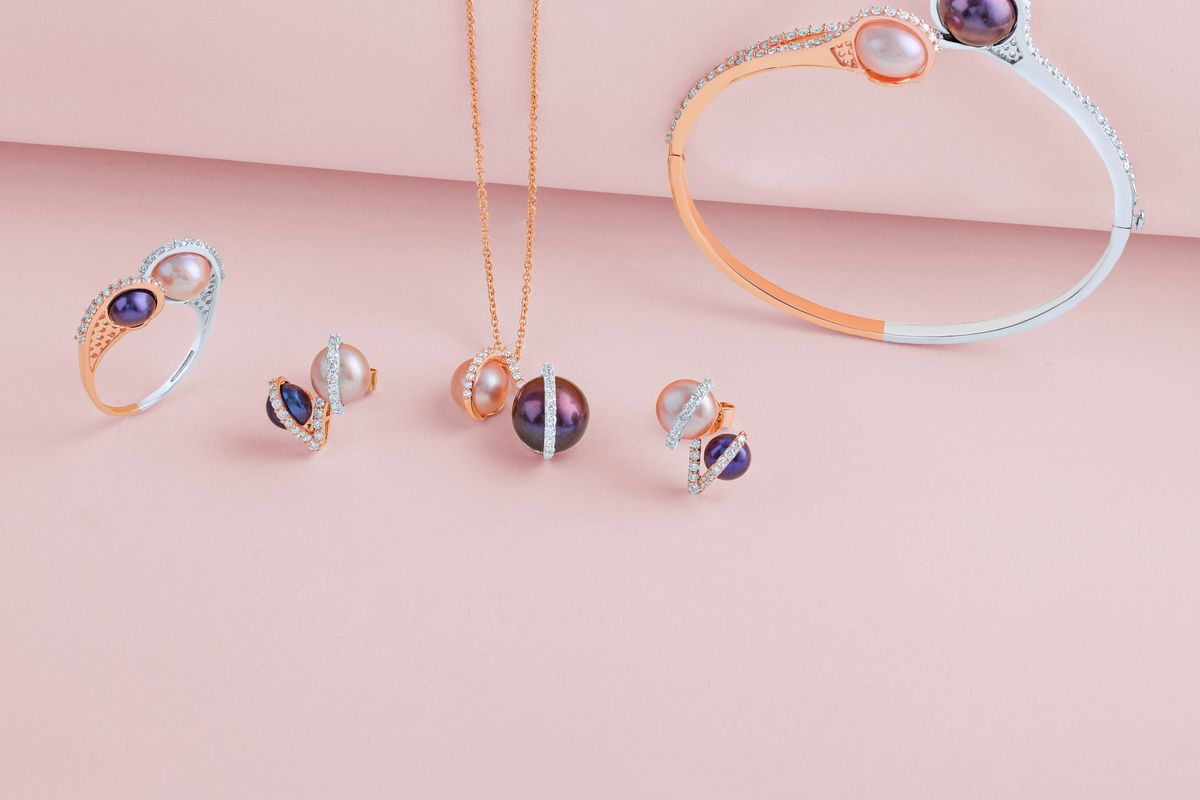
Pearl listings throw around four names and one letter grade as if both were standardized. The names describe real differences in oyster species and growing conditions; the grade, mostly, describes the seller. Here is what is fixed and what is negotiable.
Four types, four animals
Akoya pearls come from small saltwater oysters (Pinctada fucata) farmed mainly in Japan and China. Typical sizes run 6 to 8 millimeters, in white with rose or silver overtones — the classic “pearl” of a graduated strand. Freshwater pearls are grown in mussels, overwhelmingly in China, in the widest range of shapes and sizes at the lowest prices. South Sea pearls, from the large Pinctada maxima oyster in Australia, Indonesia, and the Philippines, run 9 to 16 millimeters in white through gold. Tahitian pearls, from Pinctada margaritifera in French Polynesia, run roughly 8 to 14 millimeters in naturally dark grays and greens. Size, color, and price follow the species — a listing that says “akoya” but reads 12 millimeters is not using terms carefully.
Nacre is the part you cannot fake
Nacre is the layered material the mollusk deposits around the nucleus, and its thickness drives both luster and longevity. Bead-nucleated akoya pearls carry the thinnest coatings of the four — commonly a fraction of a millimeter — which is why cheap akoya can look chalky as the coating wears at the drill holes. Freshwater pearls, mostly tissue-nucleated, are nearly solid nacre. South Sea and Tahitian pearls typically carry coatings of a millimeter or more. Sellers rarely publish nacre thickness, so read it indirectly: a dull, eggshell-like surface or visible banding near the drill hole means the coating is thin.
What the grades actually mean
The AAA-to-A scale you see on tags is an industry convention — widely used, useful for comparing pearls within one seller’s catalog, and not an international standard that any body enforces. Two sellers’ “AA” pearls may not match. Luster is the factor worth obsessing over: it is the sharpness of light reflections off the nacre, and a high-luster 8-millimeter akoya will look better than a cloudy 10-millimeter one at any grade letter. Shape and surface get their own vocabulary: round, near-round, button, drop, and the free-form baroque; surface terms run from “clean” through blemish counts, spots, and pits. When you buy, compare within a seller and ask for their own grade definitions — the answer, or its absence, tells you plenty.
Care, briefly
Pearls are calcium carbonate with an organic binder — harder than they look, softer than they feel. Perfume, hairspray, and perspiration attack the nacre surface, so the routine is the reverse of most jewelry: pearls on last, pearls off first, then a wipe with a soft, barely damp cloth before the box. Skip ultrasonic cleaners entirely, and plan on restringing knotted strands every few years of regular wear. The same last-on, first-off logic protects plated metals too, which we covered in gold-filled versus vermeil labels. A small, deliberate jewelry rotation — the same idea behind a capsule wardrobe — keeps any strand from wearing out alone.
FAQ
- Are freshwater pearls real pearls?
- Yes. They are grown by freshwater mussels, mostly in China, and because most are tissue-nucleated they are nearly solid nacre. They are real pearl material throughout, just typically less glossy than a good akoya and priced accordingly.
- Which pearl type holds value best?
- Fine round South Sea and top-grade akoya pearls hold value best, because large sizes and consistently high luster are rare in nature. Tahitian pearls hold value well in saturated dark colors. Treat pearls like gemstones: rarity of size and quality, not brand, drives resale.
- How do I judge luster without a jeweler?
- Look at the surface under diffuse indoor light and away from windows. A high-luster pearl reflects light sources with crisp, almost sharp edges, sometimes with a small mirror-like highlight. A chalky, cloudy surface means thin or poor nacre, whatever the tag says.
Claire Donovan
Spent eight years in womenswear buying before moving to editorial research. Reads care labels for fun and returns nothing without a wear log. How we research.